insights

UK Insurance Labour Market Trends: Year in Review Report

Posted March 10, 2026

The UK insurance sector is entering a period of structural transformation.

That’s why we’ve teamed up with VacancySoft to create this brand-new ‘UK Insurance Labour Market Trends: Year in Review Report’ to provide you with market-leading data into such a dynamic market.

With AI now a part of daily life across the industry, what was once innovation-led experimentation has become fully embedded across the insurance industry, meaning a defining challenge for many insurers will now be aligning technology investment with disciplined underwriting and sustainable profitability in this increasingly complex risk environment.

Get ahead of the curve by downloading your copy of the Report via the link below and arm yourself with data such as:

  • The most in-demand skills in the industry
  • A regional breakdown of the insurance recruitment market
  • Insight into companies to watch based on their current hiring practices

Have any further questions on the insurance market? Don’t hesitate to get in touch, the Sanderson team are here to help!

Download your copy of the Insurance Report here

Blue Banner Image for Content

Our Top 6 Predictions for Financial Services Hiring Trends in 2026

Posted March 2, 2026

In case you missed it, we recently launched our brand-new Financial Services Hiring Trends Report for 2025 which focuses on Digital, Technology, Change and Transformation hiring in the Financial Services sector during 2025.

The Report shows the positive news that there’s been a 12% increase in industry wide vacancies, with all signs pointing towards an optimistic and energised 2026 in the finance sector.

With the signals clear that financial services employers are beginning to re-engage with long-term workforce planning, in this blog we get stuck into some of our six top predictions for Financial Services hiring throughout the rest of 2026.

Let’s get started!

1 Increase in hiring intentions

We’re predicting an increase in hiring intentions throughout the rest of 2026, backed up by recent survey data from KPMG that’s reported that 55% of financial services firms are planning to hire more staff this year than they did in 2025.

The focus of these hiring strategies also appear to be very much technology led, with data indicating that 57% of those firms planning to hire intending to invest in AI skills. This could indicate a clear shift this year towards digital capability and AI transformation.

2 Growing business confidence

According to many business leaders across Sanderson, there’s a clear theme emerging showing growing confidence among financial services employers. This is a theme we predict to continue through the rest of the year as many of our recruiters are expecting new vacancies to emerge from major banks finally progressing with their long-awaited and large-scale digitalisation projects.

We’re also predicting an uptick in the industry-wide appetite for strategic leadership as well as future investment in technology and change projects. A prediction backed up by many of our recruitment teams noticing a number of senior hires being prepared throughout Q1.

3 Steadier market conditions

We’re anticipating that the market will start to steady out quickly during the start of 2026 thanks to optimistic regional fintech investment as well as large public sector investment. This is backed up by the Bank of England going public with its desire to expand regionally and even allocate 50% of it’s roles outside of London by 2027.

4 Reignition of DEI programmes

Our recruitment teams are also predicting a reignition of Diversity, Equity & Inclusion (DEI) programmes throughout the financial services sector. This aligns with companies in the sector becoming less reactive in their hiring and moving towards more deliberate hiring with clearer strategies to attack the marker and then deliver on long-term projects.

5 Larger candidate supply

Another prediction we’re making for 2026 financial services hiring is that the start of this year will see some of the largest candidate supply opportunities that we’ve seen since the Covid-19 pandemic of 2020. This is backed up by recent KPMG data reporting that the end of 2025 saw permanent labour availability rise at its fastest rate in four months.

And what might this mean for financial services decision makers? Well, we’d expect organisations to be well positioned to reach any immediate transformation goals thanks to access to a strong pool of talented Project Managers, Business Analysts and Testers being available to tap into.

6 Stable salaries

Our recruiters are expecting stable salary conditions for the start of 2026. Despite busy hiring markets towards the end of last year, current salary trends are not implying that a big spike in salaries is on the cards. Combine this with current market activity showing steady but controlled competition, we’re predicting that salary conditions will balance out rather than overheat as we progress through the start of the year.

How to get ahead of your financial services hiring in 2026

We’re optimistic that thanks to greater market clarity and larger talent pools being available, businesses in the financial services sector will be able to bolster their teams with talented hires that can deliver on long-term strategies and goals.

So with this in mind, now may be the time to reassess your hiring strategies, enhance your understanding of emerging technologies and address your skills gaps with the right blend of permanent or contractor talent.

To get yourself feeling more prepared to tackle the year, why not download your own copy of our new Financial Services Hiring Trends Report which reflects on and provides insight into how market trends have shaped hiring throughout the Financial Services sector, as well as providing market-leading data to help organisations like yours position yourself competitively to secure top talent in an increasingly dynamic market.

Set yourself up for success by downloading a copy of the Report here:

Download your copy of the Financial Services Hiring Trends Report here

strive-banner

8 Practical Ways Employers Can Create More Inclusive Opportunities for Young Talent

Posted February 24, 2026

Last month, we hosted an event bringing together employers, community organisations, education partners and young people from across the South West to explore practical ways to support underrepresented young people into work.

The theme was clear throughout the evening: employers don’t need huge budgets or complex programmes to make a meaningful difference. Small, intentional changes can significantly improve how young people, especially those from underrepresented backgrounds enter, experience and thrive in the world of work.

Below we have summarised the eight most actionable steps employers can take right now to support young talent.

Remove Unnecessary “Years of Experience” Requirements

Young people are often discouraged from applying for roles when job adverts prioritise tenure over ability. By focusing on skills and behaviours instead, employers can remove a major psychological and practical barrier, opening doors to those who may not follow traditional career paths but have strong potential.

Create Low‑Commitment Insight Opportunities

Insight Days, micro‑placements, office tours, mock interviews, or even short shadowing sessions can demystify the workplace. These bite‑sized experiences give young people valuable exposure and confidence, while also helping employers build early relationships with emerging talent.

Make Your Entry Pathways Clear and Visible

A simple, one‑page visual showing entry‑level roles, skills required, salary ranges and progression routes can dramatically improve transparency. When young people can see where they fit and how they can grow, the organisation becomes more accessible and aspirational.

Partner With Local Youth Organisations

Collaboration with specialist youth organisations such as Babbasa, Empire Fighting Chance, Bristol Bears Foundation and Not Impossible, ensures opportunities are designed around real need rather than assumptions. These partners bring a wealth of experience, credibility and community trust when working with young and underrepresented talent.

Encourage and Enable Staff to Mentor

Even a short mentoring conversation can shift a young person’s trajectory. Employers can have a huge impact by carving out time, recognising mentoring in performance frameworks, or providing light‑touch training to staff who want to get involved.

Build a Supportive First‑Day Experience

A well structured first day, complete with a buddy, clear expectations, and a simple upfront plan helps young people feel confident, welcomed and prepared. These small touches make professional environments far less intimidating.

Give Young People Ownership of Real Work

Assigning a small but meaningful project provides an opportunity to build confidence, develop skills and understand their own value. Responsibility and accountability for something will help them to gain hands-on practical experience which will in turn improve confidence as they grow in their early career.

Involve the Whole Organisation – Not Just HR

When teams across different functions get involved, young people can envision a broader range of possibilities. Exposure to varied roles shows them there is no single “right route” into the workplace and uncovers pathways they may never have considered.

A Final Thought

These eight actions reinforce a powerful message: impact comes from simple, human‑centred practices. By removing barriers, creating clarity and offering genuine support, employers can help unlock the potential of young people who simply need the chance to shine.

If you’d like to learn more about these themes or would like to get in touch with any of the organisations mentioned above, then please reach out .


Blue Banner Image for Content

Manchester Means Business: How Sanderson & Outsource Are Redefining Recruitment in the North West

Posted January 29, 2026

Manchester is a city that thrives on innovation, ambition, and transformation. It’s no surprise that businesses here demand recruitment partners who understand the pace, complexity, and potential of the region.

That’s where Sanderson, now strengthened by the acquisition of Outsource, comes in.

A Powerful Partnership for Manchester

In 2024, Outsource officially joined the Sanderson Group, bringing together two highly respected recruitment brands. The result? A seamless, full-service talent solution for clients across the North West.
From one-off hires to fully managed MSPs and RPOs, our Manchester team delivers with precision, speed, and care. We work across industries including Financial Services, Logistics, Retail, and more offering permanent, contract, and enterprise hiring solutions tailored to each client’s needs whether that’s financial services, logistics and supply chain, retail, engineering, media or technology.

Let’s Talk Talent

Whether you’re hiring for a single role or launching a large-scale recruitment programme, Sanderson Manchester is ready to help.

Find out more by downloading the Manchester Office Brochure via the form below.

Download your copy of the Sanderson Manchester Brochure here

Blue Banner Image for Content

Umbrella Reforms 2026: Your Questions Answered

Posted January 27, 2026

Do you feel ready for the Umbrella Reforms due to come into effect later this Spring?

Don’t worry, we’re here to help you feel more prepared!

You might have seen that last year we hosted a webinar with PayStream where our Recruitment Services Managing Director William Boney and Head of Operations & Organisational Change Anna Kramer sat down with the PayStream CEO Tony Hodkinson for an informative discussion all about the upcoming tax legislation changes and the Employment Rights Bill 2027.

These changes are set to have an impact on many umbrella companies and be felt across the whole recruitment industry, so we want to help you navigate this period of change.

Watch the Recording

As well as providing you with a link to watch the full recording to get you up to speed on discussion points such as:

• A clear overview of the tax legislation changes, including joint and several liability due in April 2026
• The impact of the Employment Rights Bill due in April 2027
• How this new legislation impacts you and how you can prepare for the change
• How you can protect yourself from liability and carry out appropriate due diligence, including insight into PaySteam’s own 6-Point Compliance Plan
• Exactly what we at Sanderson are doing to ensure compliance across the supply chain and to keep a smooth process for our clients and contractors

This blog will also provide an overview of key questions asked and answered in the informative Q&A session during the webinar. Scroll down to explore…

Umbrella Reforms FAQs

Could a client still be liable if they have not done due diligence on an agency?

Where there is a UK agency in the supply chain between the client and umbrella company, the agency and umbrella company are the ones liable if there is a tax liability. The client would not be jointly and severally liable in that scenario.

If an agency cannot pay a tax bill, does liability flow back up the contractual chain?

The legislation does not currently suggest that liability could flow up the chain if neither the umbrella or agency could pay the bill. However, we’re still waiting on official guidance and the legislation is only in draft format, it may of course change before it receives Royal Assent.

Could consulting companies who are acting like an MSP for a client be held liable under the Umbrella Reform legislation?

Yes, we believe that MSPs will be on the hook should any tax liability accrue in relation to a non-compliant umbrella company in the supply chain. “Umbrella company arrangements” are broadly defined in the draft legislation such as to include these types of contractual arrangements with the end client.

What steps are the FCSA are taking in regards to the Umbrella Reform legislation? And, if they find a member to be non-compliant could they reject their membership and be transparent to agencies?

The FCSA themselves will be best placed to answer this question in the most detail, but yes we do understand the FCSA to have robust policies in place to investigate members for alleged non-compliance with its compliance codes, and that can ultimately lead to suspension and even expulsion for serious breaches.

Do you see clients (or MSPs) simply banning the use of umbrella companies as a result of this legislation?

The Employment Rights Bill is adding more complexity and litigation risk to employers, causing a headache for many businesses. Where an end client engages with an agency that has a connected or in-house umbrella company, we perceive clients moving towards independent umbrella companies to ensure the joint and several risk falls on the umbrella company and the agency. We also perceive clients reducing and dictating the umbrella PSL to ensure only financially robust, compliant and trusted partners are engaged in the supply chain

Could all of this extra administration lead to higher umbrella fees?

Yes, we foresee that umbrella margins will be under more pressure. There will be additional cost for the umbrella in evidencing its compliance, such as third-party payslip checking software. However, it may hopefully level the playing field and increase volumes as non-compliant operators exit the market.

Why would agencies be liable before umbrella companies? What would this look like in practice, if, for example, a simple mistake is made by an umbrella company?

HMRC will consider what “relevant parties” there are in the supply chain. The umbrella and the agency that holds the contract with the client will be jointly and severally liable. If there is no agency, liability will sit with the umbrella and client. In a recent policy paper, HMRC said joint and several liability will allow them to pursue an agency in the first instances for any payroll taxes that a non-compliant umbrella company fails to remit to HMRC. If a compliant umbrella company has made an innocent error in their payroll taxes, it does seem more likely that HMRC will go directly to the umbrella company to resolve the issue. Official guidance may clarify this for us in the coming months.

Next Steps

Do you have any more questions in regards to the Umbrella Reform changes due to come into effect in a few months? Don’t hesitate to reach out to Will Boney to find out more.

Blue Banner Image for Content

Scaling Smart: The Impact of Project RPO on a Leading Pension Provider’s Talent Strategy

Posted January 22, 2026

When you need to tighten up your talent strategy and get the right people on board to achieve your goals, sometimes you need a helping hand that works with you flexibly to address your needs.

That’s exactly what a Project RPO can do for you.

As a flexible recruitment solution, Project RPO offers many of the benefits of outsourcing all your recruitment to a resourcing partner, but without the long-term commitment. It can be delivered as a “one off” engagement, working as an extension of your in-house talent team to source, screen and deliver the right candidates or teams as and when you need them. Basically, acting as a helping hand, saving time for you to navigate the day-to-day BAU.

And this is what the Sanderson team are experts in and is something we recently implemented for a leading workplace pensions provider who needed to bolster and upskill their customer service teams.

Our team thrives on absorbing each client’s culture and acting as an extension of their brand, designing and delivering bespoke solutions that successfully meets client challenges and objectives, so read on to find out how we did just that….

What was the challenge?

The client approached Sanderson as they were looking for a partner that could deliver a bespoke solution to address two of their resourcing challenges.

Getting the right candidates 

Firstly, they needed to attract and select high-quality customer service professionals across various UK regions. Having embedded ourselves with the talent teams, we quickly ascertained that they were struggling with candidate calibre. With customer service and telephony roles crucial to their business operations, they were facing issues attracting candidates that had experience here as well as in a financial services environment.

Demand was increasing and they needed to recruit approximately 120 customer service candidates in only 12 months.

Hiring manager knowledge gaps 

Secondly, they needed to design a capability improvement programme to upskill their hiring manager and talent team community on interview best practices and decision making so they can better promote their brand, while also selecting high quality candidates.

What was our solution?

Our Project RPO team quickly set to work to address both of these challenges, breaking it down into two flexible workstreams:

Attraction and selection

Within the 12-month timeline, we successfully recruited 12-15 candidates that reached the desired quality benchmarks every month for 12 months. This was achieved by designing bespoke attraction channels such as proactive sourcing, talent mapping, social media accounts and targeted advertisements (which were run by our teams) and geo-marketing campaigns.

We then implemented a fluid but structured selection process that both delivers an outstanding candidate and hiring manager experience. The selection process was broken down into multiple stages including pre-defined candidate qualification criteria for recruiters to work towards, a quality assurance call with the Sanderson team before an interview with the client team following a new structure implemented by us.

Hiring manager training

We also collaborated with their internal hiring manager and talent teams to design and develop an interview training programme that was delivered via multiple workshops. This was to ensure the hiring manager community identify and select appropriate skill sets and behaviours that will add significant value to the organisation, as well as ensuring they adequately promote the organisations brand when selecting candidates.

As this was a Project RPO and so the client still retains overall control of their recruitment strategies, we ensured this training was future-proofed so that upon completion of the Project, the internal teams are well placed to train each other on the tools, process and techniques we’ve set them up with.

Speaking with the client’s Director of Customer Engagement, they said:

Sanderson quickly recognised our resource challenges and invested real time and energy in understanding our needs. Through their commitment and collaboration, they’ve built a strong working relationship with us and have become a trusted and valued partner.”

What we achieved together

Following the completion of the first stages of this Project RPO, the client has already seen incredible results like:

  • 85%+ fulfilment of intakes within the first 6 months of the service
  • 80 started or future starters
  • 60+ head count filled
  • 83% interview to offer ratio
  • 90% score on candidate satisfaction surveys
  • Reduced hiring manager touch time on interviews
  • Hiring manager training complete
  • The right candidates hired with the necessary experience
  • Candidates feel listened to and supported throughout the process

Could we help you achieve similar results? 

Our Project RPO solutions are designed for businesses who need access to talent acquisition expertise but are not looking to outsource everything. Our solution can be delivered as a “one off” engagement as an extension of your teams to source, screen and deliver the right people as and when you need them. As your resourcing partner, Sanderson will act as a helping hand, saving time for you to navigate your people strategies.

If you’re interested to find out more, head over to our Project RPO page here.

Get in touch

We’re always open to a chat to discuss how we may be able to help you achieve similar results, so please do reach out.

Blue Banner Image for Content

Building Cyber Resilience into your Hiring Strategies with Sanderson Projects

Posted January 15, 2026

Cyber-attacks are no longer just an IT concern; they’re a strategic business issue that can impact any organisation.

In fact, recent surveys by The Guardian found that more than 25% of UK businesses have already been hit by a cyber-attack during 2025, and 73% of surveyed business leaders believe a cyber-security incident will disrupt their business in the next 12 to 24 months…!

These sobering statistics are now prompting many businesses to take action. Fast.

With this increased demand for cyber-security professionals a critical talent gap is emerging leaving businesses exposed if not addressed. And that’s where we come in.

How we help build your cyber resilience

The Sanderson Projects team works with you to ensure your organisation is set up to defend itself. And we’re pleased to have helped multiple business improve their capability by:

  • Providing niche technical skillsets through our full selection service to reduce client overhead time
  • Provide candidates with the right cultural fit thanks to our experienced SMEs
  • Shared the financial risk ensuring value beyond delivery

All at a highly competitive price point thanks to not passing on any overheads to clients.

Why cyber resilience should be a priority in your hiring strategy

Safeguarding Critical Data

Businesses now handle vast amounts of sensitive information. Whether it’s customer data, intellectual property, or financial records, a breach can have devastating consequences.

Skilled cyber security teams are vital for:

  • Identifying vulnerabilities before attackers exploit them.
  • Implementing robust data protection protocols.
  • Ensuring compliance with regulations such as the UK GDPR.

Mitigating Financial Risks with AI

The financial impact of cyber-attacks extends beyond immediate recovery costs. Downtime, lost revenue, legal liabilities, and regulatory fines can all add up.

Strengthening Customer Trust

A strong cyber security team isn’t just about defence; it’s a competitive advantage. Consumers are increasingly scrutinising how companies handle their data, and so investing in cyber resilience builds trust and helps protect your brand’s reputation.

Navigating Emerging Threats

The rise of AI-driven cyber-attacks requires a new level of expertise. Cyber security professionals with skills in AI and machine learning can:

  • Develop predictive analytics to identify threats before they materialise.
  • Create automated defence mechanisms to counter evolving attacks.

Next steps

As cyber threats continue to rise, the question is no longer whether to invest in cyber security teams, but how quickly organisations can scale up their defences.

For businesses aiming to remain competitive, resilient, and trusted in an increasingly digital world, the answer lies in prioritising the recruitment of top-tier cybersecurity talent.

Do you fancy a chat about how we can help get you the skills on board to safeguard your own business against cyber threats?

Get in touch with Victoria King today and let’s get started.

[email protected]

Blue Banner Image for Content

2026 Diversity, Equity & Inclusion Calendar: Turning Awareness into Action

Posted January 12, 2026

We’re excited to officially launch our 2026 Diversity, Equity & Inclusion (DE&I) Calendar – a free, practical resource designed to help organisations move beyond awareness and towards real, measurable culture change.

A DE&I calendar designed for real workplaces

Many Diversity, Equity & Inclusion Calendars focus on highlighting awareness days. And while these dates are important, organisations are often left asking:

What should we actually do to make an impact?

Our 2026 DE&I Calendar is designed to answer that question.

Rather than simply listing dates, this calendar provides practical, action-led activities that help organisations embed inclusion into everyday working life. It supports leaders, managers and teams to move away from tick-box approaches and towards meaningful, long-term inclusion.

Inside the 2026 calendar, you’ll find:

  • Key Diversity, Equity & Inclusion awareness dates for 2026.
  • Practical activities that support inclusion, wellbeing and belonging.
  • A strong focus on impact over performative action.
  • Clear impact areas outlining what each activity is designed to improve.
  • A suggested format to make implementation straightforward and scalable.

This structure helps organisations turn good intentions into consistent, achievable action.

Supporting meaningful inclusion and culture change

The activities included in the 2026 DE&I Calendar are designed to help organisations:

  • Strengthen inclusion and belonging across teams.
  • Support employee wellbeing in meaningful, human ways.
  • Build cultural awareness and confidence at all levels.
  • Drive long-term cultural improvement, not one-off moments.

You don’t need to do everything at once. In fact, we encourage organisations to start small – by one activity or one focus area – and build momentum over time. Consistent action creates sustainable change.

Who is the DE&I Calendar for?

The calendar is designed for organisations of all sizes and sectors, particularly those who want to:

  • Improve workplace culture.
  • Embed DE&I into everyday business practices.
  • Support inclusive leadership and people management.
  • Move beyond awareness into action.

Whether you’re continuing the journey from our 2025 calendar or discovering it for the first time, this resource is designed to support practical progress.

Get your free 2026 Diversity, Equity & Inclusion Calendar

Our 2026 DE&I Calendar is completely free and available as a digital resource. We hope this year’s calendar helps you take confident, meaningful steps towards building a more inclusive workplace in 2026 and beyond.

Download your copy in the short form below.

Blue Banner Image for Content

In Memory of Keith Dawe – Founder of Sanderson

Posted January 6, 2026

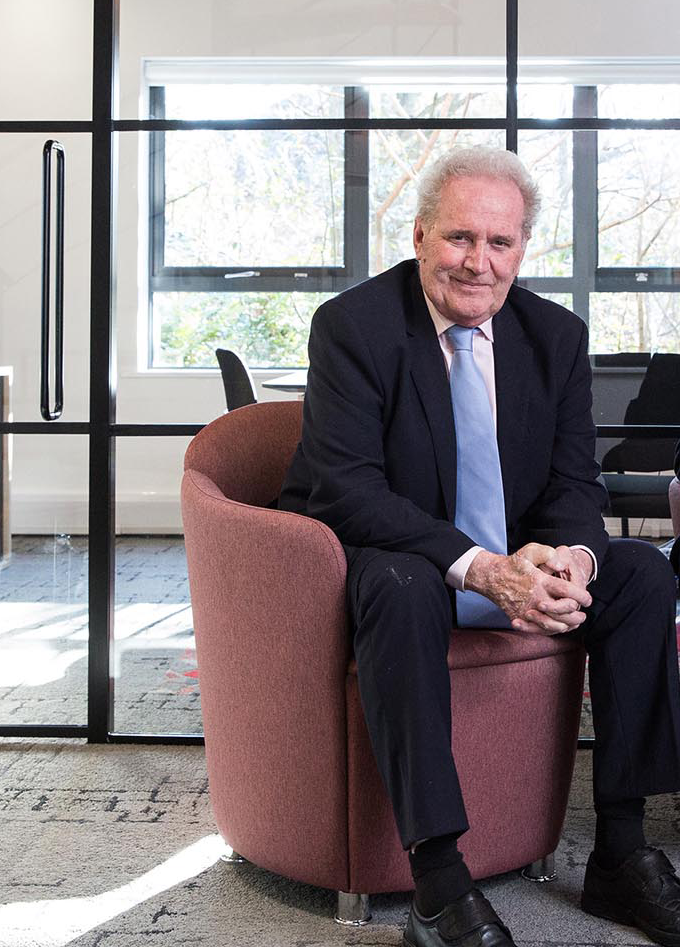
It is with great sadness to share that Keith Dawe, founder of Sanderson, passed away on New Year’s Eve.

Keith was a visionary entrepreneur who helped to shape the recruitment industry. In the 1970s, he launched Tamar DP, one of the country’s first IT contract recruitment businesses, and in 1982, he founded Sanderson, taking it from a small Bristol based company to the global talent solutions business it is today with over 500 employees in locations across the UK, Ireland, India, Hong Kong and Singapore.

Keith was passionate about creating opportunities for talented individuals, and his values of fairness, compassion, and loyalty remain central to Sanderson’s culture today. Many careers were built thanks to his belief in developing people and sharing knowledge.

Keith’s influence will continue to guide us,” said Jon Ball (Sanderson CEO) “His principles are embedded in everything we do. As we look to the future, we are committed to honouring his legacy by building on the success he created and continuing to grow Sanderson into the market-leading recruitment and talent solutions company he envisioned.”

Keith is also remembered for his time as Chairman of Bristol City Football Club from 2012 to 2019, overseeing a historic period that included winning the League One title and Johnstone’s Paint Trophy in the 2014/15 season.

Sanderson extends its deepest condolences to Keith’s family, friends and colleagues.

Blue Banner Image for Content

Hiring Insights for the UK Financial Services Sector: November

Posted December 17, 2025

November 2025 marked another busy period in the UK Financial Services industry. We saw a market open with renewed activity across the insurance and banking landscape which reflected that the sector is adjusting to rising regulatory pressure, evolving risk profiles and rapid advances in the ever-present world of AI.

This period also saw a sharp rise in Actuarial hiring across the industry with the profession appearing to shift rather than diminish. But will the growth of machine learning signal the emergence of higher-value and more strategic roles within this function?

At Sanderson we always have our finger on the pulse of the latest changes in the market so that we can help you better understand how new trends might impact your hiring plans and then support you to turn these into opportunities when it comes to your financial services recruitment.

So, with that in mind, we’re pleased to have produced this new Report with VacancySoft that sums up the latest trends we’ve been seeing in the UK Financial Services market during November.

Have a sneak peek at some of the highlights below and scroll down to grab your copy!

London Market Trend Highlights

  • Credit risk recruitment is accelerating rapidly with volumes on track to rise by 117% year on year.
  • Vacancies in the London insurance sector rose by 15.1% month on month by mid-November supported by stronger underwriting conditions.
  • IT management is a standout growth area with hiring volumes on track to rise by about 20% year on year.

Scotland Market Trend Highlights

  • There are mounting cybersecurity pressures as financial institutions increase their reliance on cloud platforms, hybrid IT frameworks and digital services.
  • Cybersecurity professionals are remaining in high demand and competition for this talent is continuing to push compensation upwards across the Scottish market.
  • Regulatory frameworks such as GDPR and NIS2 are reinforcing the requirements across firms in the industry for stronger incident reporting and security governance.

North West Market Trend Highlights

  • There was sustained growth across the financial services sector in the North, particularly in fintech and insurance.
  • Fintech remains the regions standout success story with vacancies here on track to be 55% higher than last year.
  • The insurance sector in the North continues to strengthen with vacancies rising by 7% month on month.

If you would like a more detailed overview of these trends, including the latest market data, monthly vacancy totals and insight into the top job roles by sector, then please do download a copy of the full Report via the form below.

Have any further questions? Don’t hesitate to get in touch with us, we’re well placed to help.

Download your copy of the November Financial Services Hiring Trends Report here